Poland residence card wait times 2026: 427 days on average
Short answer: Temporary residence cards in Poland took 427 days on average in 2026, far above the 60-day legal limit, which is suspended until 4 March 2027.
Residence cards in Poland now take an average of 427 days to issue. The law says 60. For anyone planning a move, a job change or a family reunion in 2026, that gap between the rulebook and reality is the most important number to understand.
The figure comes from Office for Foreigners data on temporary residence decisions issued between 1 January and 28 September 2026, as compiled and published by the Expat Essentials guide on 10 October 2026. It averages all 16 voivodeship offices. Behind that single number sits a very uneven map: a foreigner living in Kraków waited about eight months on average, while one in Katowice waited more than twenty-two months.
Wait times at all 16 voivodeship offices
The list below gives the average number of days from filing to a decision at each office, for decisions issued from 1 January to 28 September 2026. Offices are ordered from slowest to fastest.
- Śląskie (Katowice): 680 days
- Pomorskie (Gdańsk): 622 days
- Kujawsko-Pomorskie (Bydgoszcz): 547 days
- Lubuskie (Gorzów Wielkopolski): 519 days
- Opolskie (Opole): 498 days
- Podlaskie (Białystok): 470 days
- Zachodniopomorskie (Szczecin): 461 days
- Mazowieckie (Warsaw): 425 days
- Lubelskie (Lublin): 389 days
- Łódzkie (Łódź): 383 days
- Wielkopolskie (Poznań): 343 days
- Dolnośląskie (Wrocław): 329 days
- Świętokrzyskie (Kielce): 328 days
- Podkarpackie (Rzeszów): 313 days
- Warmińsko-Mazurskie (Olsztyn): 278 days
- Małopolskie (Kraków): 249 days
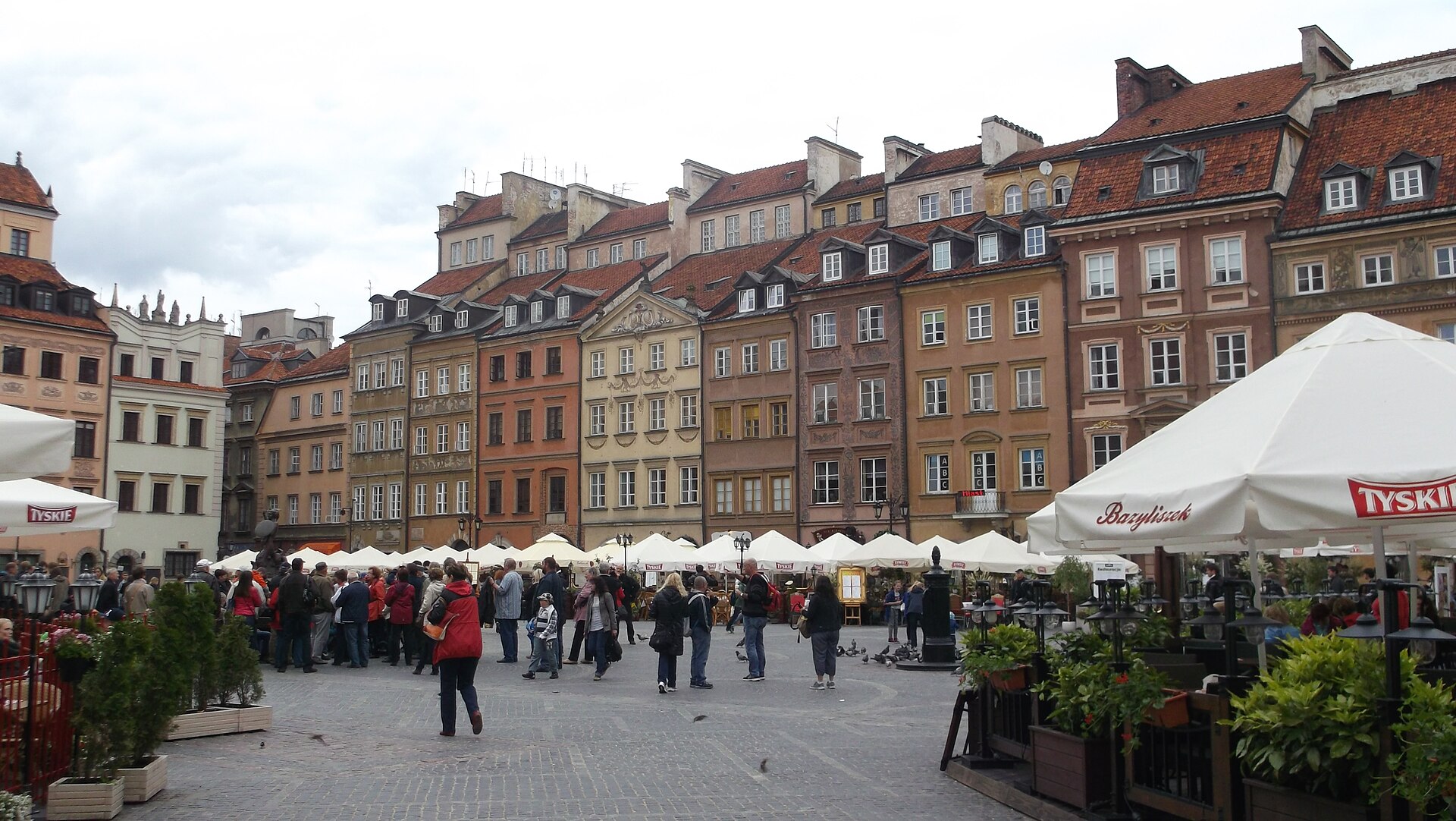
Warsaw sits almost exactly on the national average at 425 days. The spread between the best and worst office is 431 days, which is more than a full year of difference for the same type of permit.
What these numbers do and do not mean
These are averages of finished cases. They tell you how long decisions that were issued in 2026 had taken, so they include very old files that were finally closed. They are not a promise for any single application, and they measure the time to a decision, not the time until you hold the plastic card in your hand.
The Ministry of the Interior reports slightly lower averages from a different cut of the data, up to 6 July 2026: 658 days for Śląskie, 598 for Pomorskie, 447 for Podlaskie, 394 for Mazowieckie, 303 for Dolnośląskie and 242 for Małopolskie. The order of the offices is the same in both datasets. Media have also quoted a national figure of about 340 days, which comes from another source and period.
The trend is upward almost everywhere. According to the ministry, the Mazowieckie average rose from 153 days in 2023 to 394 days in 2026. Małopolskie went from 128 days in 2023 to 242 days in 2026. Dolnośląskie is the exception: it improved from 472 days in 2024 to 273 days in 2025, then rose again.
Why the waits are so long
Volume is the main reason. Voivodes received 508,109 temporary residence applications in 2025 and another 212,153 between 1 January and 1 June 2026, according to a Ministry of the Interior letter dated 30 June 2026. Office for Foreigners statistics for 2026 also show more applications coming in than decisions going out: 345,605 applications against 272,464 decisions at the time they were sampled in late September. When more files arrive than leave, the queue grows.
The ministry adds two more explanations. Closing very old cases pushes the average up: Warsaw issued 26,877 decisions in the period it analysed, including 11,070 in cases that had lasted more than a year and 738 that had lasted more than two. It also points to additional state-security checks.
The legal limit is paused
The Act on Foreigners sets 60 days for a temporary residence decision. In practice that limit is not running. Under article 100d of a special act, deadlines in residence cases handled by voivodes do not start, and running ones are suspended, until 4 March 2027. Despite the act's name, the rule covers all foreigners, not only Ukrainian citizens.
Courts have pushed back in individual cases, and a delayed application is not hopeless. The two formal tools against delays are a ponaglenie, which is a formal reminder to the office, and then a complaint to the administrative court. Ask a lawyer before using either one.
What to do if you are planning a move
- Plan in months, not weeks. Count on a year or more at most offices, and check your own voivodeship's figure above.
- Apply with a complete file. The clock only starts once your application is complete and you have appeared in person, so a missing document costs extra weeks.
- Since 27 April 2026, temporary residence applications are filed online only, through the MOS system.
- Check your right to work and travel before booking anything. Your legal stay can continue while the case is pending, but the confirmation you get is not a travel document.
Frequently asked questions
How long does a residence card take in Poland in 2026?
Temporary residence decisions issued between 1 January and 28 September 2026 took 427 days on average across the 16 voivodeship offices, according to Office for Foreigners data. The fastest office was Kraków (Małopolskie) at 249 days and the slowest was Katowice (Śląskie) at 680 days.
How long does a residence card take in Warsaw?
The Mazowieckie office in Warsaw averaged 425 days in 2026 according to Office for Foreigners data. The Ministry of the Interior reported 394 days for data up to 6 July 2026.
Is the 60-day deadline still valid?
The law sets 60 days for a temporary residence decision, but under article 100d of a special act the deadlines in residence cases are suspended until 4 March 2027. Some courts have refused to apply the suspension, so a lawyer can tell you whether a complaint about delay makes sense in your case.
Does the wait include getting the physical card?
No. The figures measure the time to the decision. After a positive decision the card still has to be produced and collected.
Can I choose a faster voivodeship office?
No. The office that handles your case depends on where you live.
Sources
* Photo: Stare Miasto, Warszawa, Wikimedia Commons, CC BY-SA 3.0.